Showing posts with label vegetarian. Show all posts

11/12/2015

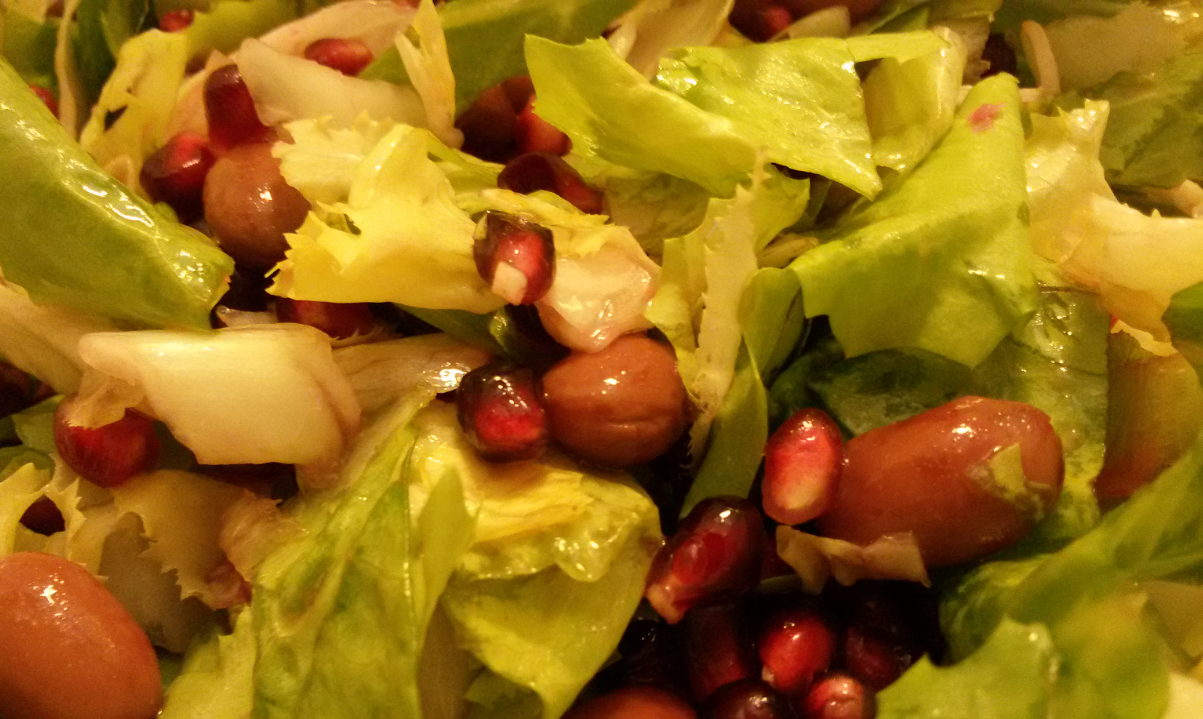
HEALTHY AND EASY FALL SALAD

Vegetarian salad
We are what we eat! Everything we eat and drink directly affects our cells. We know that two-thirds of our plate should be vegetables and fruit, with the remaining one-third covered by lean protein (lentils, beans, chicken, fish) and whole grains.
Autumn has arrived in Italy but at the same time, the heat of this strange November makes me abandon the soups for fresh salads. I love salad and this is my Autumn Salad.

Ingredients:
  • a lettuce
  • 1 cup of pinto beans (borlotti)
  • 2 pomegranates
  • 10 walnuts
  • cider vinegar
  • extra virgin olive oil
  • toasted wholemeal bread
  • paprika, curcuma and pepper
This recipe is really easy, just shelling the pomegranate and on my facebook page you can find a post where you see how to do it easily https://www.facebook.com/ciboformafisicasalute/?ref=hl , add pinto beans, nuts and cider vinegar, extra virgin olive oil, spices and serve with toasted wholemeal bread.
Enjoy your meal!


For beans
Soak the beans the night before (for at least 12 hours, remember that pre-soaking is really important), cover beans with about three inches of water and pay attention because beans do “drink” the water. then you cook them in pressure cooker (cooking time depend on what kind of bean and what kind of pressure cooker you have), usually 40 minutes.


Try my new recipe: roman gnocchi

11/03/2015

Roman Gnocchi Light


Roman Gnocchi Light
Roman Gnocchi Light

ROMAN GNOCCHI LIGHT


This is a simple recipe, it’s inexpensive but really good! My daughter loves these gnocchi! This is much lighter than classical recipe, in fact the classical have butter, eggs and too much cheese. Gnocchi alla Romana is a typical italian recipe, from Rome (the capital of Italy). This dish can be prepared in advance so it’s easy and quick. Roman Gnocchi are tender inside with a thin crunchy crust.

Ingredients:
  • 2 cups (250 gr.) semolina flour
  • 4 1/2 cups (1 lt.) water
  • 2 tablespoons extra virgin olive oil
  • salt
  • 2 oz. (50 gr.) parmesan cheese freshly grated
Method:

in a heavy bottomed saucepan, bring the water to a lightly simmer, then add salt and semolina flour then stir with a whisk to avoid lumps.
Cook for at least 5 minutes. The mixture should be like some mashed potatoes. Remove from heat add olive oil and 1 oz. parmesan and stir until all is well mixed.
Put the dough over a baking paper and roll to about 0.50 inches (1 cm).
Cut the dough in circles, I used a coffee cup with edges oiled with some extra virgin olive oil. If you choose, like me, the classic form you can re-knead what is left and roll out again to make other gnocchi.
Put a baking paper or oil into baking pan, add gnocchi and sprinkle some Parmesan, pour some oil on. Preheat the oven to 350/400°F gas 4 and bake about 30 minutes.

10/24/2015

Whole Wheat Bread for Sandwiches


Flour, yeast, water and salt, a traditional loaf needs only four ingredients. So why are calcium propionate, amylase, chlorine dioxide and L-cysteine hydrochloride now crammed into our daily bread?
Over the last year, I’ve gradually moved more towards making my own food at home. There are several reasons for this, for example: it tastes better, it reduces preservative intake, it’s more nutritious, and it’s cheaper. It does take time, but once you get used to it, most food preparation doesn’t take much more time than going to the store, buying it, taking it home.
In the industrial breadmaking is the appearance of a healthy dose of preservatives. These preservatives are there solely to extend the shelf life of the bread, again reducing costs for the manufacturer. Every time you eat a piece of store-purchased bread, you’re getting a dose of preservatives with each bite.
This is my recipe for a whole wheat bread for sandwiches

Ingrendients:

  • 500g Whole Wheat flour (3 cups + 1/3 cup)
  • 330g water (1 cup + 1/2)
  • 1 teaspoon salt
  • 6g fresh yeast or 1 package active dry yeast (you can get yeast near the flour at your local grocery store)
  • 3 tablespoons of extra virgin olive oil
Dissolve the yeast in a little of water by stirring it gently with your fingers. You should stir this until there are no lumps in the yeast. Pour the yeasty water into the bowl with the flour and salt and add the rest of the water. Use one hand to hold the bowl and the other to begin mixing the dough (you could use a wooden spoon but it’s just another thing to wash up, and hands are more effective). Knead until to the flour will absorb the water and the gluten structure should begin to develop. Then grab the dough ball out of the bowl, slap it down on the table, and start beating on it. Do this for ten minutes. Just take the dough, punch it flat, then fold it back up into a ball again, and repeat several times and knead for 10-15 minutes. If you are using a mixer, rather less time will be needed. At the end the dough should be soft, slightly silky to the touch and elasticity.
Put the dough on to the worktop and roll it into a sausage and place it in a grease PlumCake tin. The roll should be roughly the same size as the bread pan. Set your bread to prove in a warm place, covered with a cloth over the bowl (I put it in the oven off) for two hours.
Put that loaf in the oven at 400 degrees Fahrenheit (200 degrees Celsius) for 30/40 minutes. When it’s done, pull it out and immediately remove it from the pan to cool.
Let it cool down completely before slicing.